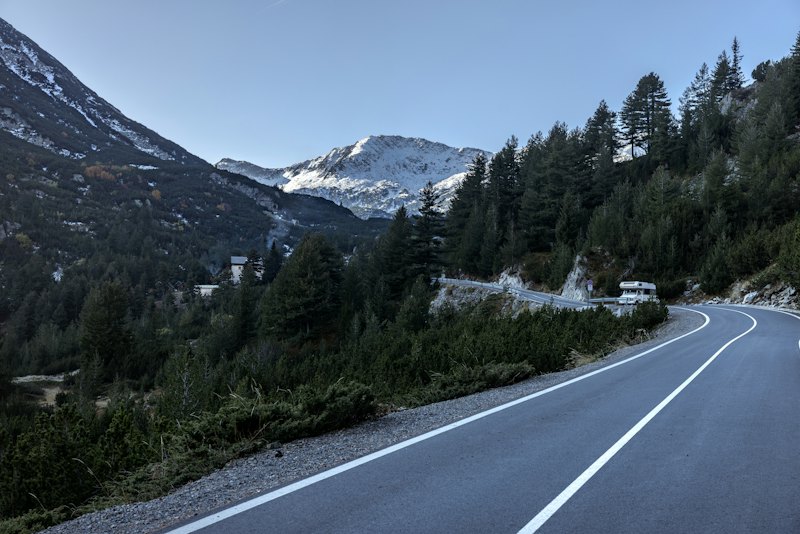
Photo: Robin Canfield / Unsplash
Journal · Field guide
No booking button? How to ask a campsite for a pitch
Dear reader, some of the loveliest campsites in Europe have no booking button at all. There's an orchard, a view, a family who has run the place for forty years and, somewhere at the bottom of the website, an email address. My two have learned to write the message that gets a quick yes. If I may, here is how.
Why the best places are often the hardest to book
A booking system costs money, needs setting up and wants looking after. For a campsite with thirty pitches and one person at reception, an inbox and a paper diary do the job perfectly well. That is exactly why these places are worth the effort: they don't appear on the big booking sites, fewer people find them, and in high season they're far more likely to have room.
 ← Worth one polite email, if I may.
Put everything in the first message
The most common reason an enquiry goes slowly is that it starts a conversation instead of asking a question. “Do you have space in August?” earns a reply asking which dates, how many people, and what you're driving. Save everyone a day and include it all:
- Arrival and departure dates, written as dates. “14 to 16 August” is clearer than “two nights from the fourteenth”.
- Who's coming: adults, children (ages help, since many sites price by age), and any dogs.
- What you're sleeping in: tent, caravan or motorhome, and for vehicles, roughly how long it is. At seven and a half metres, I never leave this out.
- Anything that matters to you: electricity, a shady pitch, arriving late.
- How flexible you are. “A day earlier or later works too” gives them room to say yes.
Write it in their language, and in yours
A message in the campsite's own language gets read faster and answered more warmly. But a message only in a language you've guessed can go wrong, so the safest form is both: their language first, then the same request in English underneath.
Keep it plain. Short lines with labels read well in any language and avoid the grammar traps that trip up translations. Something like this works almost anywhere in Germany or Austria:
Guten Tag,

wir interessieren uns für einen Aufenthalt auf Ihrem Campingplatz
vom 14.08.2026 bis 16.08.2026.

Erwachsene: 2
Unterkunft: Wohnmobil, 7,5 m

Könnten Sie uns mitteilen, ob in diesem Zeitraum noch etwas frei ist
und was der Aufenthalt kosten würde?

Vielen Dank im Voraus.
Mit freundlichen Grüßen
Then the same again in English, below a line, so that nothing depends on your German.
Or let Vacamp write it
This is exactly what Vacamp does for campsites that book by email. Open one on the map, and the detail sheet offers an enquiry already written for the dates and party on your screen, in the local language, with the English copy underneath. It writes in twelve languages, from Danish to Portuguese, and only uses a language when it's confident the message reads naturally. Where it isn't, you get clear, polite English instead of a clumsy machine translation.
It works out the language from the campsite's country, not its website, on purpose: plenty of German campsites run websites that claim to be in English simply because nobody ever changed a setting.
Timing and patience
- Arriving today or tomorrow? Phone. An email may not be read until the evening.
- Otherwise, email in the morning. Small sites often answer the inbox after the rush at reception.
- Give it a day. In high season a family-run site may be answering fifty messages. One friendly reminder after twenty-four hours is fine.
- Say thank you, even for a no. You might be back next year, and they might know a neighbour with a free field.
P.S. She writes the emails. He insists on signing them. Forty years in an office will do that.
With every good wish,
Oliver